
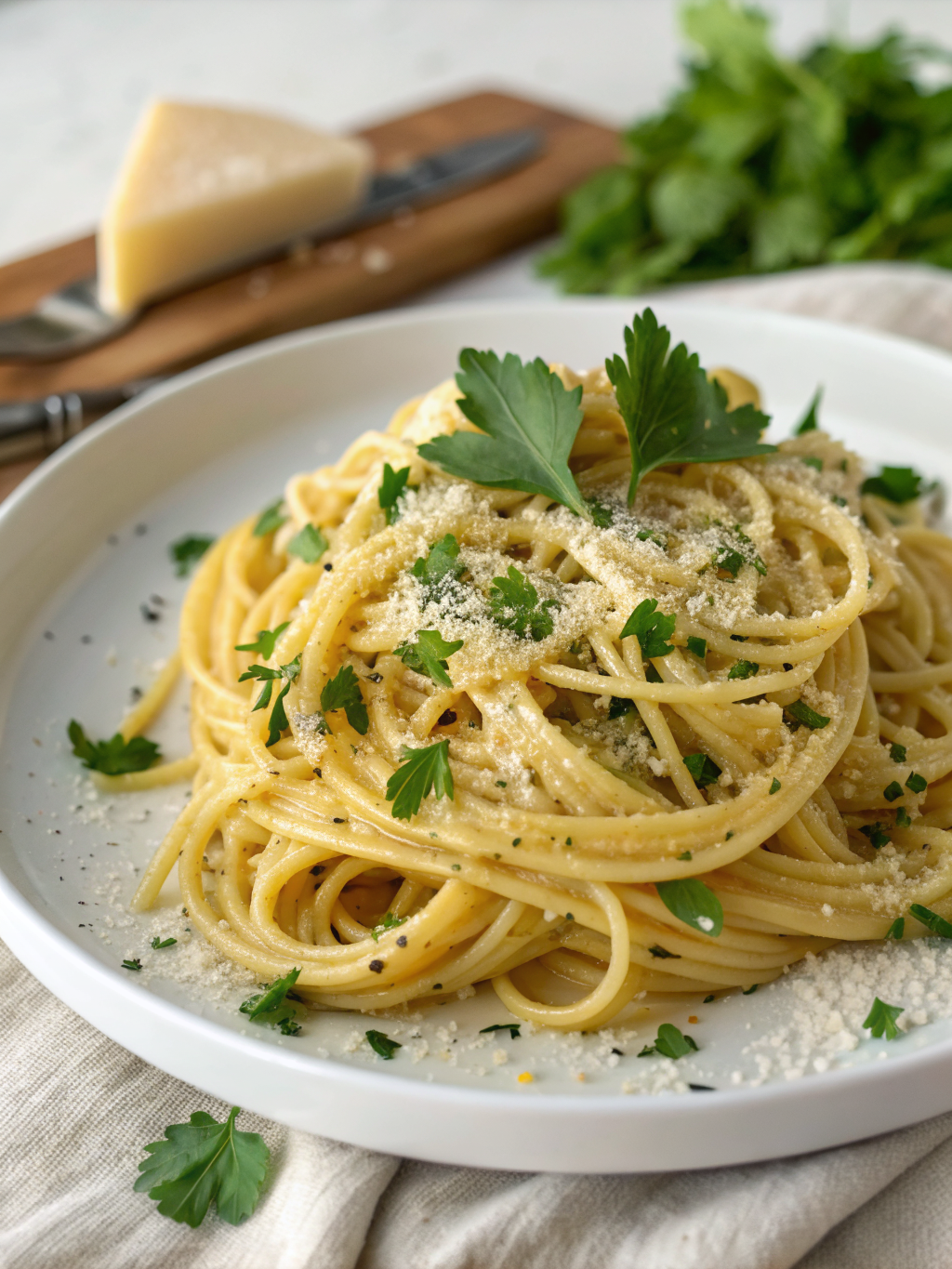
Can a simple garlic butter pasta genuinely be worth your kitchen table? If you have thought buttery pasta means complicated sauces or overcooked noodles, this 25-minute version changes that. It uses toasted garlic, browned butter, bright lemon, and fresh herbs to create a fast, glossy sauce that clings to al dente strands. It is the kind of quick weeknight dish that tastes like effort, but often behaves like a shortcut for busy evenings.
Ingredients For Garlic Butter Pasta
– 12 oz dry spaghetti, linguine, or fettuccine; whole-wheat adds fiber, and zucchini noodles lower carbs.
– 6 tbsp unsalted butter; replace half with olive oil for a lighter, higher smoke point version.
– 6 garlic cloves, thinly sliced; use 8 cloves for stronger flavor.
– 1/2 tsp red pepper flakes, optional, or 1/4 tsp crushed fennel for sweet heat.
– 1/2 cup reserved starchy pasta water, essential for a silky emulsion.
– 1 tsp fine sea salt for boiling water, adjusted to taste.
– 1 lemon, zested and halved for juice; white wine vinegar works in a pinch.
– 2 tbsp chopped parsley, basil, mint, or chives.
– 1/4 cup grated Parmesan, pecorino, or cashew cream with nutritional yeast for vegan.
– 1 small minced shallot, optional, for deeper savory flavor.
Timing For Garlic Butter Pasta
Prep 10 minutes, cook 15 minutes, total 25 minutes. That is faster than many creamy pastas that require roux-based sauces or long simmering. The sauce comes together in one skillet, and pasta can finish in the pan.
Step-by-Step Instructions For Garlic Butter Pasta
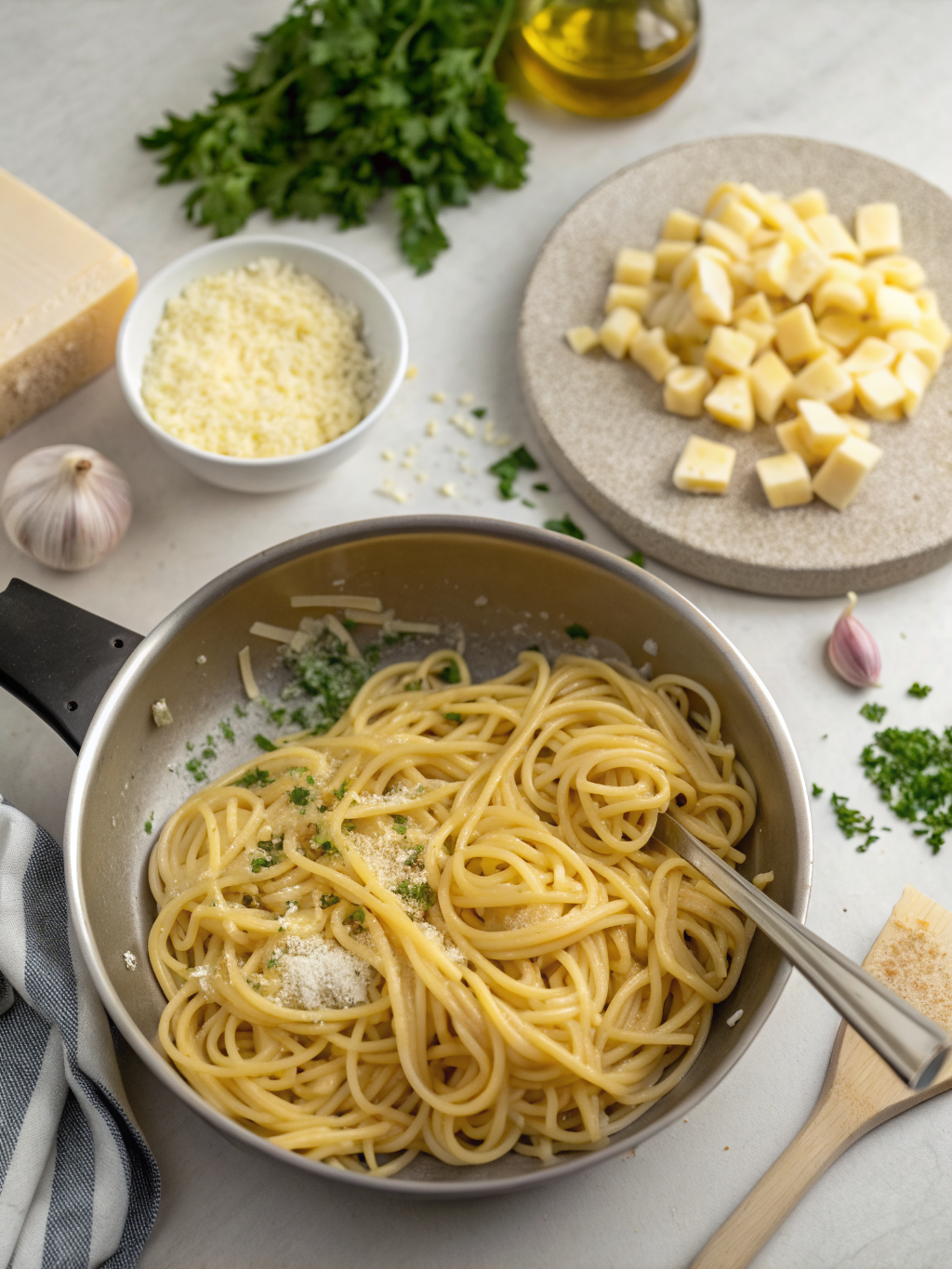
1. Bring a large pot of salted water to a boil
Salt the water to taste; it should feel like sea water, about 1 teaspoon per quart. Start pasta in the boiling water and stir gently for the first minute. This prevents strands from sticking and sets the gluten, so the final garlic butter pasta stays separate and elegant.
2. Brown the butter while pasta cooks
While pasta boils, melt butter in a large skillet over medium heat. Add garlic and red pepper flakes. Cook 60 to 90 seconds until garlic is fragrant and golden, not burnt. The butter should turn light caramel color. Brown butter is the flavor key: it adds a toasted, nutty depth that plain butter cannot match.
3. Toss pasta with sauce and steam liquid
Drain pasta, reserving 1/2 cup water before draining. Return pasta to the warm pot and add butter-garlic sauce. Toss quickly, then add pasta water one splash at a time. The starch makes a silky sauce that coats the noodles. Keep tossing 1 to 2 minutes over medium-low heat.
4. Finish with lemon, herbs, and cheese
Off heat, add lemon juice, zest, parsley, Parmesan, and black pepper. Toss until creamy and glossy. If the sauce looks dry, add a little more pasta water. Taste for salt now, because cheese can change the balance. This step is where the dish becomes bright, warm, and genuinely restaurant-worthy.
5. Rest and serve
Let the pasta sit off heat for 1 minute so the sauce settles. Plate quickly while hot. Garnish with extra parsley, a crack of pepper, and a thin slice of lemon. If you are serving several people, keep a warmed bowl ready so the garlic butter pasta stays glossy until eaten.
Nutritional Information For Garlic Butter Pasta
Values are estimates per serving for two, using spaghetti, butter, and Parmesan. Each serving is approximately 540 calories, 24 g total fat, 6 g saturated fat, 72 g carbohydrates, 18 g protein, 4 g fiber, 570 mg sodium, and 10 g sugar. These numbers can vary with pasta type, oil additions, cheese quantity, and whether whole milk butter or lower-fat cream is used. The sauce is rich but not overloaded when balanced with pasta water and herbs. If you want fewer calories, reduce butter by 2 tablespoons and add a squeeze of lemon or extra garlic.
Healthier Alternatives For Garlic Butter Pasta
Keep the bold flavor while reducing saturated fat and refining carbs. Use 1/2 cup whole-wheat spaghetti or ancient grain pasta to increase fiber and slow digestion. Swap half the butter for extra-virgin olive oil; the smoke point is higher, and you gain heart-health polyphenols. For a dairy-free version, use 3 tablespoons olive oil, 1 tablespoon vegan butter, and nutritional yeast with a squeeze of lemon for richness. To boost protein, add 1 cup cooked shrimp, chickpeas, or shredded chicken after the first two steps. For a lighter finish, halve the Parmesan and add more lemon zest. If you want a lower-carb plate, serve the garlic butter pasta sauce over spiralized zucchini or cauliflower rice, though traditional pasta gives the best texture.
Serving Suggestions For Garlic Butter Pasta
Serve this garlic butter pasta with a simple salad of arugula, lemon vinaigrette, and toasted pine nuts to cut the richness. A grilled lemon slice on top adds aroma and visual appeal, while a cracked egg on the plate creates a creamy pool for diners to break at the table. Pair it with a light pinot grigio, a crisp rosé, or a sparkling water with lemon. For a family meal, add a small side of roasted broccoli rabe or garlicky spinach. If you like a more Italian direction, serve it with a wedge of focaccia dusted with rosemary. For a quick presentation, use a twirled nest of pasta, a pool of butter-garlic sauce underneath, and a shower of Parmesan. This dish also shines as a base for a pizza night side, a lunchbox lunch, or a comforting post-holiday leftover.
Common Mistakes To Avoid With Garlic Butter Pasta
The biggest mistake is burning the garlic. Burnt garlic turns bitter and ruins the whole dish, so keep the butter at medium, not high. Many home cooks drain pasta and let it cool, then add sauce, which creates a starchy, stuck mess. Transfer hot pasta directly into warm butter and keep tossing. Too much water can turn the sauce watery; add it gradually and only as much as needed. Under-seasoning is another pitfall: pasta water, butter, garlic, and lemon all need salt to feel balanced. Also avoid overcooking the pasta. It should be al dente for 60 to 90 seconds before moving to the sauce, because it finishes cooking in the pan. If the sauce looks dry, do not rush and add cream; use more reserved pasta water first.
Storing Tips For Garlic Butter Pasta
Garlic butter pasta is best eaten the same day because pasta softens as it absorbs butter. Store leftovers in an airtight container in the refrigerator for up to 2 days. To reheat, add 1 to 2 tablespoons of warm water or broth and microwave or reheat on the stovetop over low heat until glossy again. Do not freeze cooked pasta with butter sauce, as the texture becomes gummy. If you are prepping ahead, store the browned butter mixture in a small jar for 3 days and the cooked garlic in a sealed container for 3 days. To make a next-day meal even faster, prepare a separate pot of browned butter and freeze in one-inch portions; then you can sauce the pasta quickly when needed.
Conclusion
This garlic butter pasta proves that the simplest dishes can be the most rewarding. With salted pasta water, browned butter, toasted garlic, and a splash of starchy liquid, you can make a rich, glossy weeknight plate without complicated technique. It is fast enough for busy evenings, flexible enough for dietary tweaks, and rich enough to feel special. If you want a dish that tastes homemade and satisfying, this is the pasta to keep in your rotation.
FAQs
Can I prep ahead?
Make the browned butter garlic sauce up to two days ahead, store it covered, and combine it with hot fresh pasta. Add warm water while tossing to rebuild the glossy sauce. This is the easiest make-ahead strategy because the sauce still develops nutty browned-butter flavor.
Is it dairy-free?
Traditional garlic butter pasta uses butter and Parmesan. For a dairy-free version, use olive oil, vegan butter, lemon, and nutritional yeast. Add extra olive oil at end for silkiness.
Can I use olive oil?
Yes. Swap half the butter for extra-virgin olive oil to lower richness and raise the smoke point, which helps keep garlic golden. It works well with lemon and parsley.
Why is my sauce dry?
Add warm starchy pasta water in small splashes and toss until the sauce clings evenly to the spaghetti or other noodles.