

5If you’re looking for a pesto pasta recipe that tastes like it took hours but actually takes about 20 minutes, you’ve landed in the right spot. I’ve made this dish more times than I can count, both in professional kitchens and in my own cramped apartment kitchen after a long shift. It’s the kind of meal that turns a handful of simple ingredients into something that feels a little bit fancy, without any of the fuss. Whether you’re new to cooking or you’ve just never quite gotten pesto pasta right at home, I’m going to walk you through every step so it comes out perfect the first time.
Why You’ll Love This Recipe
There’s a reason pesto pasta shows up on so many family dinner tables across the country. It’s simple, it’s fast, and it’s endlessly flexible.
- It’s fast. From start to finish, you’re looking at about 20 minutes, which makes it perfect for busy weeknights.
- It’s budget-friendly. You only need a handful of ingredients, and most of them are pantry staples.
- It’s endlessly adaptable. Add chicken, shrimp, or roasted vegetables, and it turns into a completely different meal.
- It’s kid-approved. The bright, cheesy, garlicky flavor is a hit with picky eaters too.
- It reheats well. Unlike a lot of pasta dishes, leftovers actually taste great the next day.
Honestly, once you get the basic technique down, you’ll probably never buy a jar of bland pasta sauce again.
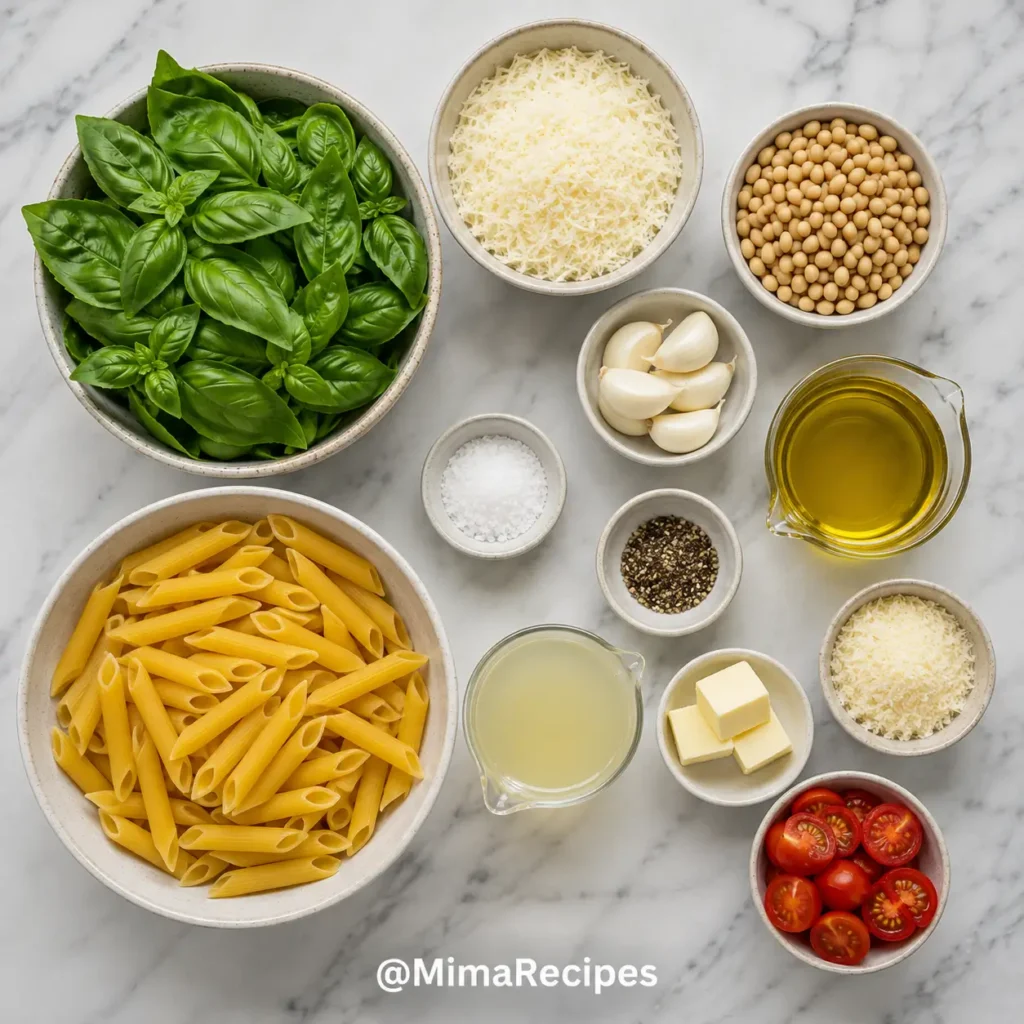
Ingredients
Here’s everything you’ll need to make this pesto pasta recipe from start to finish. I’ve included substitutions in case you’re missing something or want to switch things up.
For the Pesto (or use store-bought):
- 2 cups fresh basil leaves, packed
- 1/2 cup grated Parmesan cheese
- 1/3 cup pine nuts (walnuts or almonds work as a substitute)
- 2 garlic cloves, peeled
- 1/2 cup extra-virgin olive oil
- 1/2 teaspoon kosher salt
- 1/4 teaspoon black pepper
For the Pasta:
- 1 pound pasta (spaghetti, penne, or fusilli all work well)
- 1 teaspoon salt (for the pasta water)
- 1/2 cup reserved pasta water
- 1/4 cup grated Parmesan cheese, plus more for serving
- 1 tablespoon butter (optional, for extra silkiness)
- Cherry tomatoes, halved, for garnish (optional)
Substitution Tip: No time to make fresh pesto? A good-quality store-bought pesto works just fine here. I won’t tell if you don’t.
Kitchen Equipment
You don’t need anything fancy for this recipe. Here’s what I recommend having on hand:
- Large pot for boiling pasta
- Food processor or blender (if making fresh pesto)
- Colander
- Large mixing bowl or skillet for tossing the pasta
- Measuring cups and spoons
- Wooden spoon or tongs
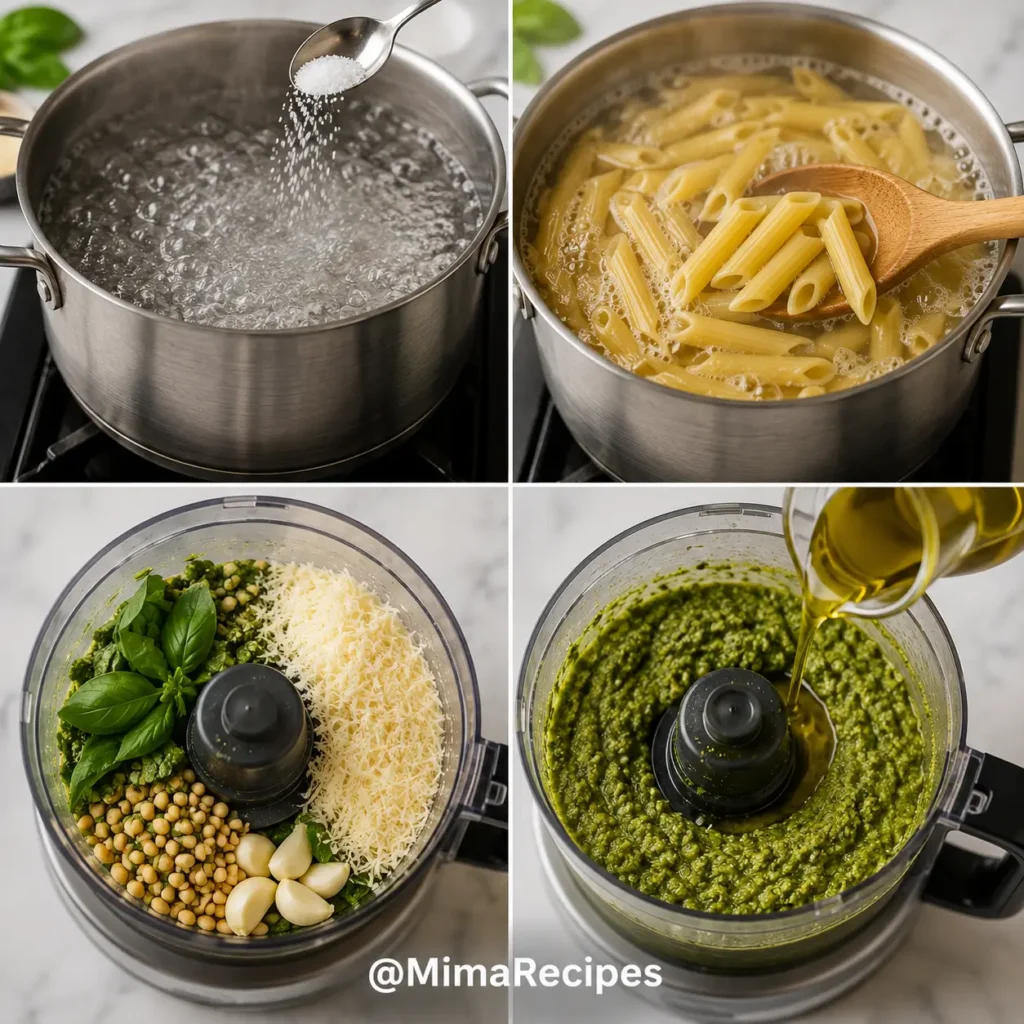
Step-by-Step Instructions
Follow these steps closely, and you’ll have a restaurant-quality pesto pasta recipe on your table in no time.
- Boil the pasta water. Fill a large pot with water, add the salt, and bring it to a rolling boil. Salting the water is key here since it’s your only chance to season the pasta itself.
- Cook the pasta. Add the pasta to the boiling water and cook according to the package directions until al dente. Al dente simply means “to the tooth,” so the pasta should still have a slight bite to it.
- Make the pesto. While the pasta cooks, add the basil, Parmesan, pine nuts, and garlic to a food processor. Pulse a few times until everything is finely chopped.
- Stream in the olive oil. With the food processor running, slowly pour in the olive oil until the pesto is smooth and creamy. Season with salt and pepper, then taste and adjust as needed.
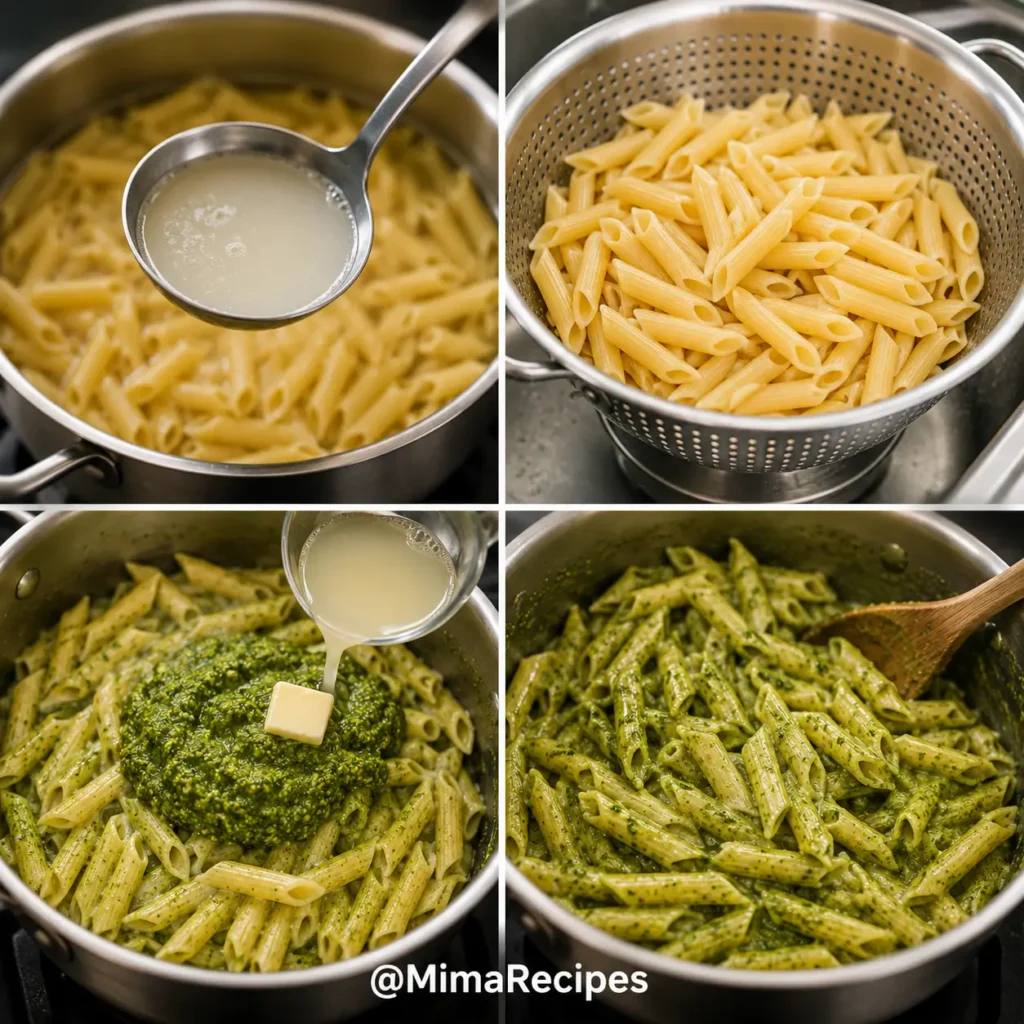
- Reserve the pasta water. Right before draining the pasta, scoop out about 1/2 cup of the starchy cooking water. This little step makes a huge difference in how well the sauce clings to the noodles.
- Drain the pasta. Drain the pasta in a colander, but don’t rinse it. Rinsing washes away the starch that helps the sauce stick.
- Combine everything. Return the pasta to the pot or transfer it to a large mixing bowl. Add the pesto, a splash of the reserved pasta water, and the butter if you’re using it.
- Toss and adjust. Toss everything together until the noodles are evenly coated. If the sauce feels too thick, add a little more pasta water, a tablespoon at a time.
- Serve immediately. Plate the pasta while it’s warm, top with extra Parmesan, and add halved cherry tomatoes for a pop of color and freshness.
Chef’s Tip: Pesto is delicate, so avoid adding it to piping-hot pasta straight off the stove. Let the pasta cool for about 30 seconds first so the basil keeps its bright green color and doesn’t turn bitter.
Chef Tips for Success
After making this dish more times than I can count, here’s what I’ve learned actually makes a difference:
- Use fresh basil whenever possible. Dried basil just doesn’t have the same punch of flavor.
- Toast the pine nuts first. A quick toast in a dry skillet brings out a deeper, nuttier flavor.
- Don’t skip the pasta water. It’s the secret to a silky, restaurant-style sauce instead of a dry, clumpy one.
- Serve it warm, not hot. Pesto can lose its vibrant color and flavor if it sits on heat too long.
Variations
One of the best things about this pesto pasta recipe is how easily it adapts to whatever you’re craving.
- Add protein. Grilled chicken, sautéed shrimp, or crispy pancetta all work beautifully here.
- Go vegetarian-heavy. Toss in roasted zucchini, cherry tomatoes, or sautéed mushrooms for extra texture.
- Make it creamy. Stir in a couple tablespoons of heavy cream or mascarpone for a richer, more indulgent sauce.
- Try a different green. Swap half the basil for spinach or arugula for a slightly different flavor profile.
- Use a different nut. Walnuts give the pesto a slightly earthier taste, while almonds add a subtle sweetness.
What to Serve With Pesto Pasta
Pesto pasta is hearty enough to stand on its own, but it also pairs well with a few simple sides. A crisp green salad with a light vinaigrette balances out the richness of the sauce nicely. Garlic bread or a warm crusty loaf is perfect for soaking up any extra pesto left on the plate.
If you want to round out the meal with more protein, this dish pairs wonderfully alongside something like a creamy garlic shrimp pasta for a seafood-forward dinner spread, or you can serve smaller portions of both for a pasta night with options. For a heartier, meat-based pairing, a batch of cowboy butter chicken pasta makes a great contrast in flavor if you’re feeding a hungry crowd.
Storage & Reheating
Pesto pasta stores surprisingly well, as long as you handle it right.
To store: Place leftovers in an airtight container and refrigerate for up to 3 days. The pesto may darken slightly, which is completely normal and doesn’t affect the taste.
To reheat: Warm the pasta gently in a skillet over low heat with a splash of water or olive oil to loosen the sauce back up. Avoid the microwave if you can, since it tends to dry the pasta out and can make the basil taste a little bitter.
To freeze: I don’t recommend freezing the finished dish, but you can absolutely freeze extra pesto on its own in an ice cube tray for up to 3 months. Just pop out a cube whenever you need a quick sauce fix.
Common Mistakes to Avoid
Even a simple recipe like this one has a few pitfalls. Here’s what to watch out for:
- Overcooking the pasta. Mushy noodles won’t hold the sauce properly, so aim for al dente every time.
- Skipping the pasta water. Without it, the sauce often ends up dry and clumpy instead of silky.
- Using old, wilted basil. Fresh, vibrant basil makes a noticeable difference in flavor and color.
- Adding pesto to boiling-hot pasta. This can cause the basil to turn brown and taste slightly bitter.
- Over-blending the pesto. Pulse instead of running the food processor continuously, so the pesto keeps a bit of texture instead of turning into a paste.
Nutrition Information (Estimated, Per Serving)
- Calories: 480
- Protein: 14g
- Carbohydrates: 52g
- Fat: 24g
- Fiber: 3g
- Sodium: 520mg
Note: Nutrition values are estimates and will vary depending on the exact ingredients and brands used.
Frequently Asked Questions
Can you just stir pesto into pasta?
Yes, you absolutely can. In fact, that’s the simplest way to make this dish. Just make sure to add a splash of reserved pasta water when you stir it in, since this helps the pesto coat the noodles evenly instead of clumping in one spot.
What does pesto pasta pair well with?
Pesto pasta pairs beautifully with grilled proteins like chicken or shrimp, a simple side salad, or warm crusty bread. If you’re planning a full Italian-style dinner, a light appetizer like caramelized onions on crostini can round things out nicely before the main course.
How do you use a jar of store-bought pesto with pasta?
Store-bought pesto works great in a pinch. Simply cook your pasta, reserve some pasta water, and stir the jarred pesto in off the heat along with a splash of that reserved water. This warms the pesto gently without cooking it directly, which helps preserve its fresh flavor and bright color.
What sauce is good with pesto pasta?
Pesto is already a sauce on its own, but a lot of home cooks like to lighten it up with a bit of cream or mix it with a small amount of marinara for a rosy pesto sauce. If you want something extra indulgent, stirring in a tablespoon of butter or mascarpone right at the end works wonderfully too.
Conclusion
This pesto pasta recipe proves that you don’t need a long ingredient list or hours in the kitchen to make something genuinely delicious. With fresh basil, good olive oil, and a little pasta water magic, you’ll have a dinner that feels special enough for guests but easy enough for a random Tuesday night. Give it a try this week, and don’t forget to snap a picture of your finished bowl of pesto pasta (basil ALT text: “creamy basil pesto pasta topped with parmesan and cherry tomatoes”) I’d love to see how yours turns out. If you enjoyed this recipe, check out more comforting pasta dinners like chicken alfredo pasta, feta tomato pasta, or a high-protein steak pasta salad right here on Mima Recipes. Happy cooking!
Print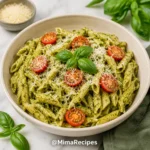
Easy Pesto Pasta Recipe: The 20-Minute Dinner You’ll Make on Repeat
- Prep Time: 15 minutes
- Cook Time: 10 minutes
- Total Time: 35 minutes
- Yield: 4 servings 1x
- Category: Pasta
- Cuisine: American
Description
Ingredients
For the Pesto (or use store-bought):
- 2 cups fresh basil leaves, packed
- 1/2 cup grated Parmesan cheese
- 1/3 cup pine nuts (walnuts or almonds work as a substitute)
- 2 garlic cloves, peeled
- 1/2 cup extra-virgin olive oil
- 1/2 teaspoon kosher salt
- 1/4 teaspoon black pepper
For the Pasta:
- 1 pound pasta (spaghetti, penne, or fusilli all work well)
- 1 teaspoon salt (for the pasta water)
- 1/2 cup reserved pasta water
- 1/4 cup grated Parmesan cheese, plus more for serving
- 1 tablespoon butter (optional, for extra silkiness)
- Cherry tomatoes, halved, for garnish (optional)
Instructions
Follow these steps closely, and you’ll have a restaurant-quality pesto pasta recipe on your table in no time.
- Boil the pasta water. Fill a large pot with water, add the salt, and bring it to a rolling boil. Salting the water is key here since it’s your only chance to season the pasta itself.
- Cook the pasta. Add the pasta to the boiling water and cook according to the package directions until al dente. Al dente simply means “to the tooth,” so the pasta should still have a slight bite to it.
- Make the pesto. While the pasta cooks, add the basil, Parmesan, pine nuts, and garlic to a food processor. Pulse a few times until everything is finely chopped.
- Stream in the olive oil. With the food processor running, slowly pour in the olive oil until the pesto is smooth and creamy. Season with salt and pepper, then taste and adjust as needed.
- Reserve the pasta water. Right before draining the pasta, scoop out about 1/2 cup of the starchy cooking water. This little step makes a huge difference in how well the sauce clings to the noodles.
- Drain the pasta. Drain the pasta in a colander, but don’t rinse it. Rinsing washes away the starch that helps the sauce stick.
- Combine everything. Return the pasta to the pot or transfer it to a large mixing bowl. Add the pesto, a splash of the reserved pasta water, and the butter if you’re using it.
- Toss and adjust. Toss everything together until the noodles are evenly coated. If the sauce feels too thick, add a little more pasta water, a tablespoon at a time.
- Serve immediately. Plate the pasta while it’s warm, top with extra Parmesan, and add halved cherry tomatoes for a pop of color and freshness.
Nutrition
- Calories: 480
- Sodium: 520mg
- Fat: 24g
- Carbohydrates: 52g
- Fiber: 3g
- Protein: 14g